Tengboche to Dingboche Dingboche – 4,380 m / 14,370 ft – 4 to 5 hrs
Trek time: 6 to 7 hours
Accommodation: Tea House
Trek Distance: 12 km/7.45 miles
Meals: Breakfast, Lunch and Dinner
Overnight: Dingboche
Day 5 of the Everest Base Camp Trek is when the trail finally pushes you above the tree line. The walk from Tengboche to Dingboche is about 5 to 6 hours over roughly 12 km (7.5 miles), with around 550 m (1,800 ft) of elevation gain, and it’s the day the landscape stops looking like a forest trail and starts looking like the high Himalaya you came for.
After running this stretch with hundreds of trekkers, our guides know exactly where to slow down, where to stop for tea, and where the wind picks up enough to need an extra layer.
You’ll start the morning with sunrise behind Tengboche Monastery — most of our trekkers wake early for this, whether they planned to or not, because the light hitting Ama Dablam (6,812 m / 22,349 ft) from the monastery courtyard is something you don’t want to miss.
After breakfast at the teahouse, the trail drops gently for about 30 minutes through rhododendron and birch forest down to Deboche (3,820 m / 12,533 ft), a small Buddhist settlement with a nunnery and a few quiet teahouses.
Your guide will likely point out the Deboche Nunnery as you pass — it’s home to a small community of Ani (Buddhist nuns), and one of the few places on the trail where you’ll see this side of Khumbu monastic life.
From Deboche, the trail drops to a suspension bridge over the Imja Khola river, with prayer flags strung the full length and the gorge dropping steeply below.
After crossing, you climb gently for about an hour to Pangboche (3,985 m / 13,074 ft) — the highest year-round Sherpa settlement in the Khumbu, and the home of many of the climbing Sherpas who work on Everest expeditions.
Pangboche Monastery here is the oldest in the region, said to date back to the 1660s, and your guide can usually arrange a quick visit if the lama is in. There’s a lower and an upper trail through Pangboche; our guides usually take the upper route for the cleaner views of Ama Dablam.
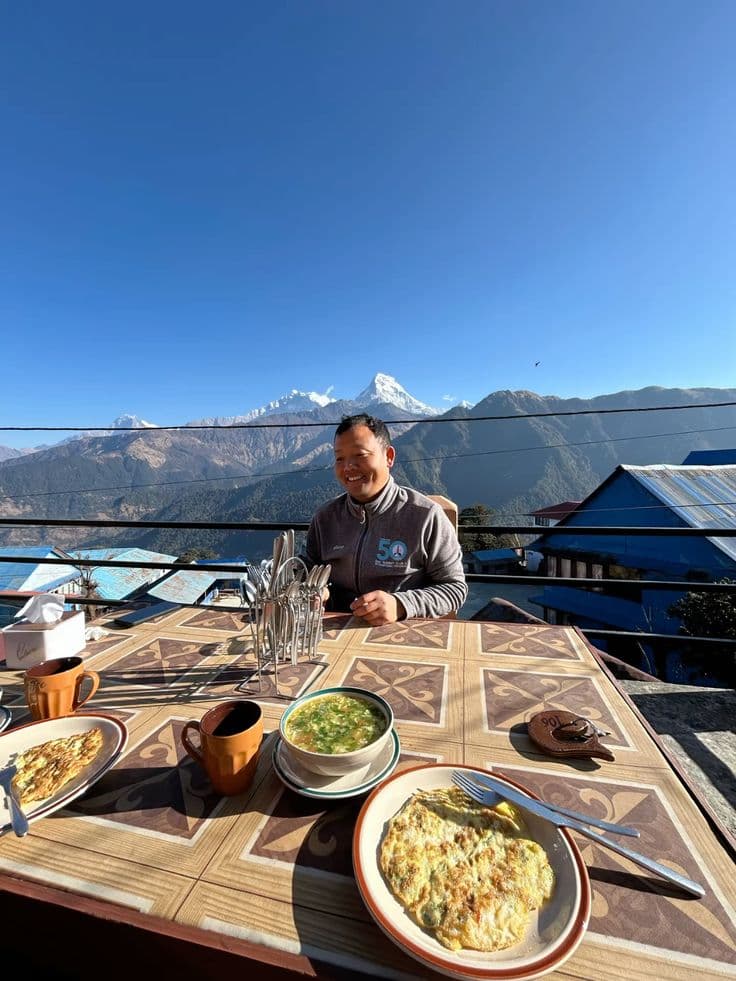
Pangboche is also the lunch stop. Your guide will order ahead so the food is ready when you arrive, and you’ll have a proper sit-down break — usually 45 minutes to an hour — before the second half of the day. Most of our trekkers go for Sherpa stew or garlic soup here. Garlic, by the way, is not folklore — it’s a mild natural blood thinner, and our guides recommend it at every meal from this point onward.
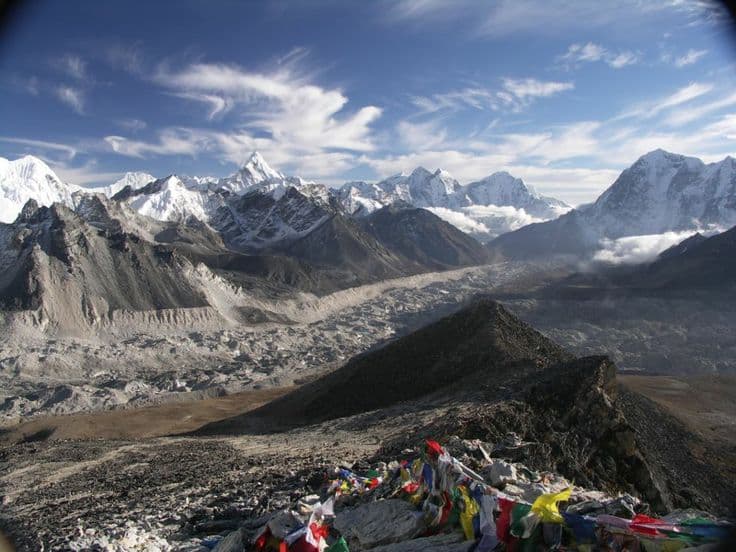
After Pangboche, the landscape changes fast. The trees thin out, the trail opens, and you walk along the Imja Khola valley with the river running below and Lhotse (8,516 m / 27,940 ft) rising directly ahead.
About 90 minutes (roughly 3 km / 1.8 miles) from Pangboche, you’ll reach a fork in the trail at Shomare (4,010 m / 13,156 ft) — the right path leads to Pheriche, the left to Dingboche. We take Dingboche, because the Imja Valley views and the acclimatization profile work better for our standard itinerary.
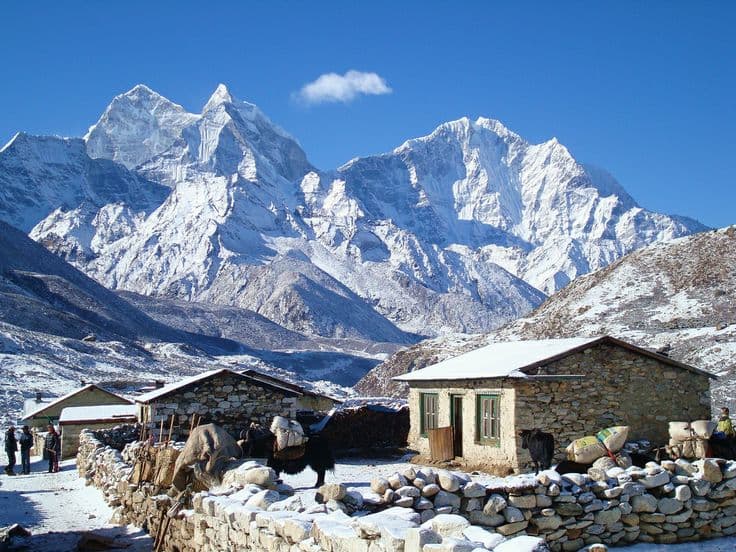
The final hour into Dingboche is a gentle climb through stone-walled potato fields — the highest cultivated fields in Nepal — with Island Peak (6,189 m / 20,305 ft) appearing at the far end of the valley. Dingboche (4,410 m / 14,468 ft) sits in a wide, wind-protected bowl, with stone-walled lodges built low against the weather and yaks grazing in the surrounding pastures. You’ll arrive by mid-afternoon, having covered roughly 12 km (7.5 miles) for the day.
You’ll stay here for two nights, with tomorrow being your second acclimatization day. After checking in, our guides usually recommend doing nothing more strenuous, drinking 3 to 4 litres of water throughout the afternoon, and getting an early dinner. You’re set up well for the rest of the climb.